
Rabby Wallet Download and Transaction Simulation: what power users should actually know
Misconception: a “secure wallet” is just about secret-keeping. That’s the shorthand many users repeat, but it leaves out a far more practical layer of protection for active DeFi traders and power users: the ability to understand, simulate, and selectively decline the economic effects of each transaction before you sign it. Rabby Wallet makes that precise capability central to its product, and understanding how the simulation and risk-scanning mechanisms work is the best way to decide whether to download and integrate Rabby into a multi-chain workflow.
This explainer walks through the mechanism behind Rabby’s transaction simulation, the decision trade-offs for power users in the US, limitations you should expect, and practical heuristics for using Rabby alongside hardware wallets, multi-sig providers, and approval-revocation tools. If you want to download a wallet that prioritizes pre-transaction visibility rather than post-failure mitigation, this piece will give you a working mental model and a checklist to evaluate whether Rabby fits your operational needs.
How transaction simulation actually works (mechanisms, not slogans)
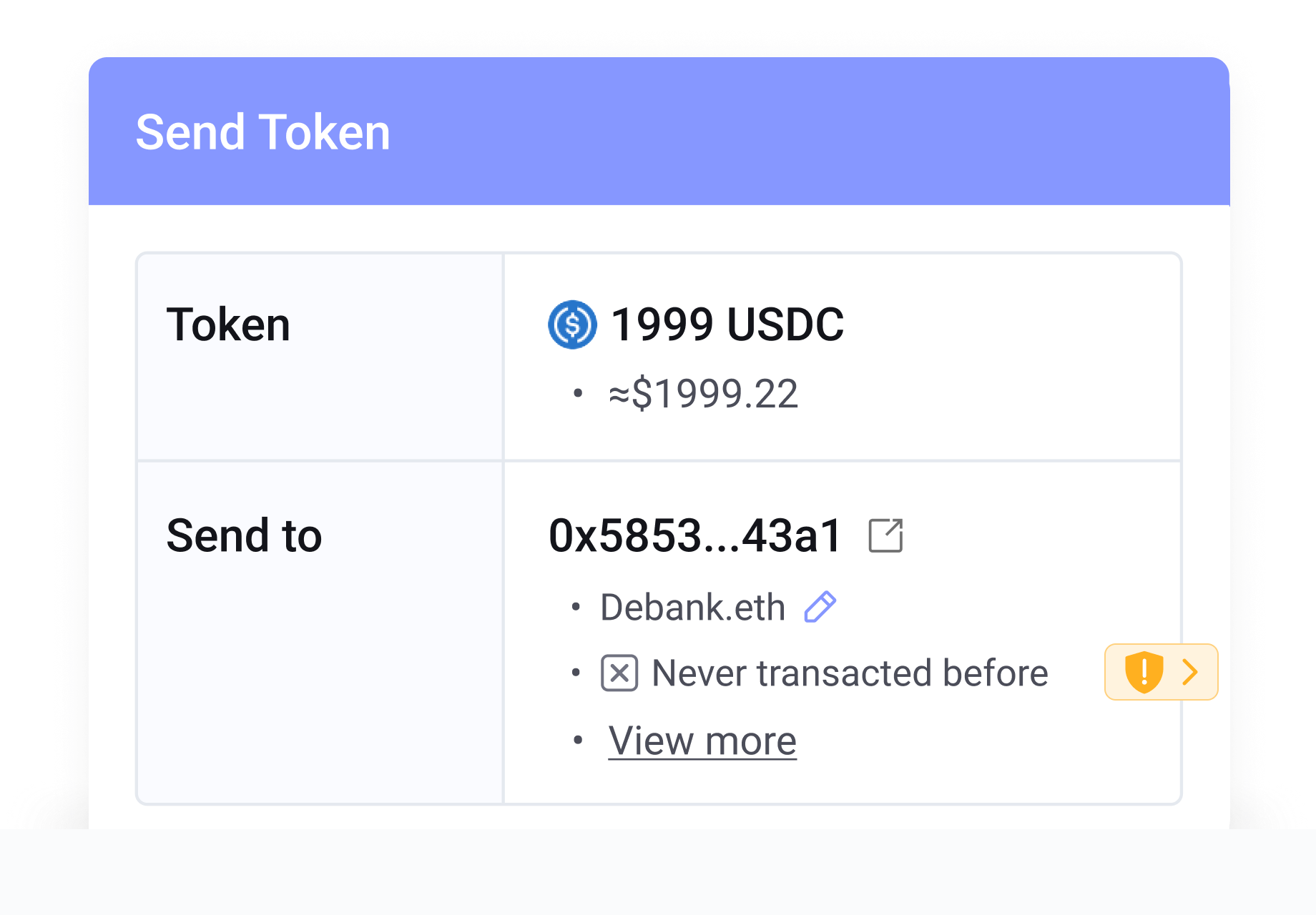
Transaction simulation is best understood as a local dry run: before you hand over a cryptographic signature, the wallet replays the intended transaction against a node or local EVM fork to compute the expected state changes. Rabby shows the simulated token balance deltas, gas fees, and any contract-level side effects it detects. That prevents blind signing—when a user signs a transaction without knowing what it will do economically.
Mechanically, the simulation uses the same inputs a blockchain node would process (recipient, data payload, value, gas limits) and executes the smart contract code in an emulator. The emulator produces two essential outputs: (1) the expected net change in each token balance the transaction touches, and (2) whether any internal calls or approvals would redirect funds or produce unusual reentrancy behavior. Rabby augments that with a security engine that flags known-bad addresses, previously exploited contracts, suspicious approval patterns, and non-existent recipients.
Important boundary condition: simulations are only as accurate as the state snapshot they run against and the emulator’s model. Mempool front-running, on-chain state changes caused by other transactions between simulation and inclusion, or nodes using different gas estimators can produce a different real-world result. In practice, simulation reduces a class of blind mistakes but does not eliminate on-chain risk like sandwich attacks or time-of-check/time-of-use (TOCTOU) problems.
Why this matters to DeFi power users in the US
For an active DeFi user, the marginal value of a pre-signature simulation is not abstract: it changes how you manage approvals, interact with aggregators, and stage cross-chain operations. Rabby’s dashboard also aggregates portfolios across 90+ EVM-compatible chains and shows DeFi positions such as liquidity pools and loans, so you can simulate a transaction while keeping immediate sight of collateral and exposure. That combination helps with tactical decisions—e.g., whether to cancel an approval or top up gas on a remote chain before executing a bridging sequence.
From a regulatory or practical compliance angle in the US, a non-custodial wallet that surfaces economic intent makes it easier to document why a transaction was sent (useful if you need to explain transfers to exchanges or auditors). Rabby’s open-source MIT license adds transparency for security reviews—something institutions and compliance teams often value when evaluating vendor risk.
Trade-offs and limitations you must accept
No fiat on-ramp: Rabby currently does not let you buy crypto with USD inside the wallet. That keeps custodial risk low, but it means you still need an on-ramp provider if you want to move from bank to on-chain in a single app. Likewise, Rabby lacks native staking interfaces; you’ll rely on external dApps or staking managers to stake tokens.
Simulation ≠ invulnerability. The 2022 Rabby Swap smart-contract exploit that cost roughly $190k is a concrete reminder: even teams that fix and compensate users face code and integration risk. The response—freezing the contract, compensating losses, and increasing audits—shows good operational hygiene, but it also demonstrates that simulation and audits mitigate, rather than eliminate, systemic vulnerabilities.
Usability vs. control: Rabby’s automatic network switching and ‘Flip’ toggle to swap default extension behavior with MetaMask are convenience features that save time but can obscure which account is active if you rapidly switch contexts. Power users must build a habit of checking the active account and network before signing, especially when hardware wallets are connected.
Where Rabby fits in a power-user security stack
Rabby is best thought of as a visibility and gatekeeping layer. It integrates with hardware wallets (Ledger, Trezor, Keystone, and others) and with institutional custody and multi-sig platforms like Gnosis Safe, Fireblocks, Amber, and Cobo. That means you can combine Rabby’s simulations with an offline key or a multi-sig policy—improving both auditability and operational security.
Use case patterns where Rabby adds tangible value:
- Approval hygiene: run a simulation to see what token allowances a swap or lending contract will use, then use the built-in revocation tool to cancel excessive allowances you previously granted.
- Cross-chain sequencing: top up gas on the destination chain using the built-in cross-chain gas top-up, then run a final simulation so you aren’t stranded with a stuck bridge step.
- Institutional ops: route user intents through Rabby while final signing happens in a multi-sig, keeping a clear simulation trace in your operational logs.
Decision heuristics: when to download and when to pair with other tools
Download Rabby as your primary browser extension if you want pre-signature clarity, automatic network switching, and a strong approvals UI. Pair it with a hardware wallet if you move material amounts—simulation helps you decide whether to sign; the hardware wallet provides the signing root of trust. If your workflow requires a fiat on-ramp or native staking, plan to keep a separate provider or use a custodial product selectively.
Quick heuristic: for frequent trading and aggregator use, prioritize simulation + hardware signing. For long-term cold storage, Rabby is useful for occasional operational checks but not a full substitute for a pure offline vault. For institutional flows, combine Rabby’s visibility with multi-sig custody to keep both transparency and enforceable policy.
What to watch next (conditional signals, not predictions)
Three signals would materially change Rabby’s relative attractiveness: (1) a built-in fiat on-ramp or integrated compliant broker would lower onboarding friction and attract more mainstream US users, (2) native staking features would make the wallet more of an all-in-one asset manager, and (3) any recurrence of contract-level incidents would raise questions about the security of adjacent product features. If Rabby moves toward these integrations, watch for how they balance custody risk and compliance requirements; the addition of fiat touches legal thresholds that change user expectations and regulatory exposure.
FAQ
Is Rabby Wallet safe to download and use for significant DeFi trades?
Safe is relative. Rabby improves safety by simulating transactions and flagging known risks, and it supports hardware wallets and multi-sig integrations. That lowers the chance of blind signing errors. But it does not eliminate smart-contract risk, mempool-based attacks, or UI/extension-level vulnerabilities. Use Rabby with a hardware signer for significant trades and follow approval-revocation hygiene.
Where can I download Rabby Wallet and what platforms are supported?
Rabby is available as a Chromium extension, mobile apps for iOS and Android, and desktop clients for Windows and macOS. You can learn more and access official downloads here: rabby wallet. Always verify you’re using an official source and match extension publisher information in the browser store.
Does Rabby handle fiat on-ramps or staking directly?
No. Rabby currently does not provide a built-in fiat on-ramp nor native staking features. Those are explicit limitations: you’ll need a third-party on-ramp or staking service if you require those functions inside the same UX.
How reliable are Rabby’s transaction simulations versus real chain outcomes?
Simulations are highly informative but not infallible. They replay the transaction against a snapshot of chain state and estimate gas and token deltas. Rapidly changing mempool conditions, front-runs, or state changes before inclusion can produce different outcomes. Treat simulation as a strong guardrail, not a guarantee.
Bottom line: if you trade, aggregate, or manage positions across multiple EVM chains and you value seeing the economic outcome before you sign, Rabby’s transaction simulation and revocation tools represent a clear step up in operational visibility. Pair it with hardware signing and multi-sig for higher-stakes operations, and remember the practical limits: no fiat on-ramp, no native staking, and simulation that reduces, but does not remove, on-chain risk.
Henüz yorum yapılmamış.